Genomics of Rapid Evolution in Novel Environments

Real-time evolution, observed at global scale.

The paradigm that evolution of species is a gradual, slow process has been challenged. With a large network of collaborators, GrENE-net is a coordinated distributed experiment with Arabidopsis thaliana, built to test whether the genetic basis of rapid adaptation is predictable — especially in novel future climates.
Explore the data About the network
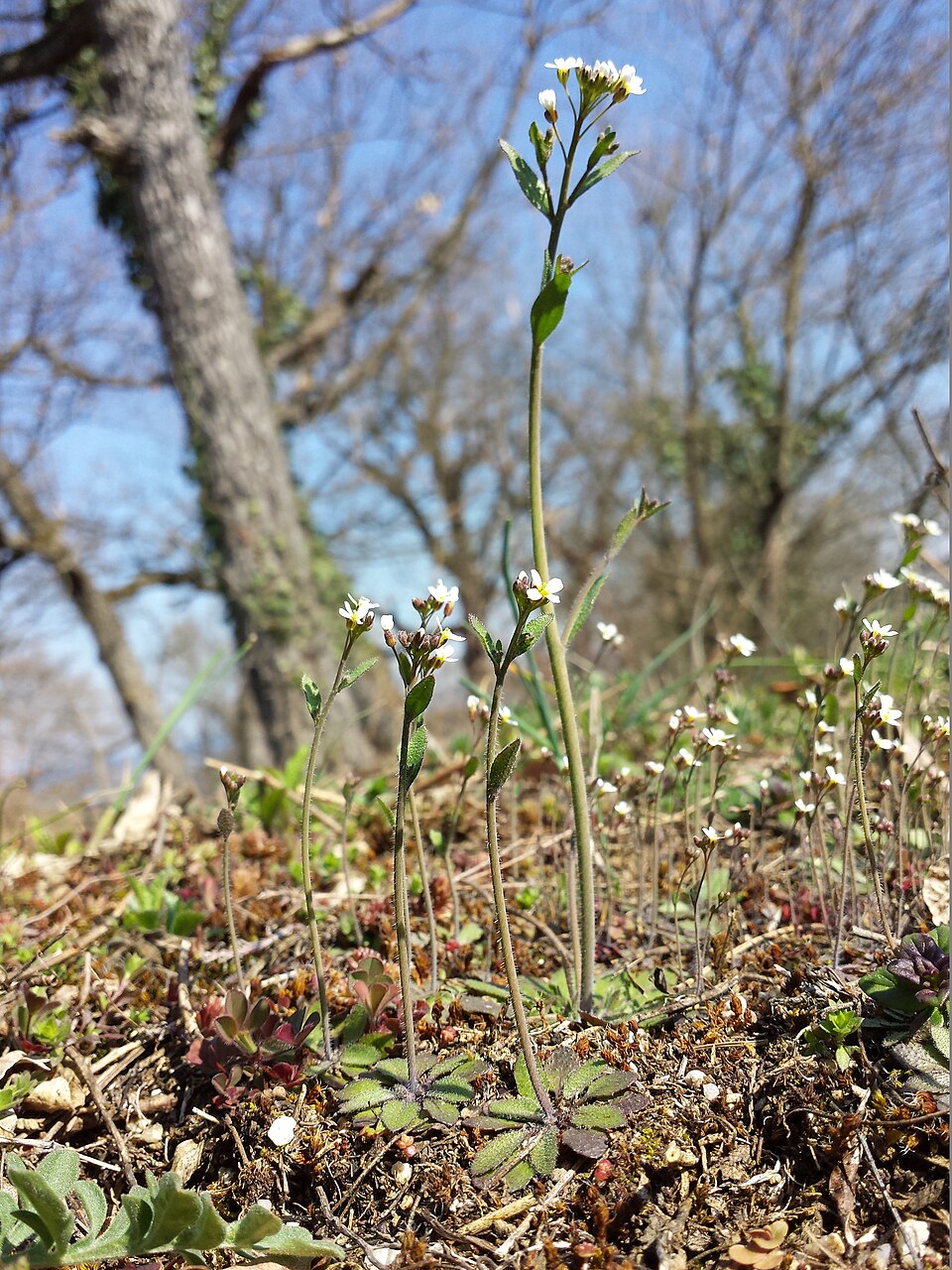
Arabidopsis thaliana
Arabidopsis thaliana · Wikimedia Commons
230
natural Arabidopsis accessions sown
2,500+
samples whole-genome sequenced
2017–22
seasons of continuous observation
45
17
3
field sites · countries · continents
Project phases
Phase I

The field experiment & first sequencing

Setting up the distributed field experiment across all sites and pool-sequencing the evolving populations through the first three years.

2017–2020 · + sequencing
Phase II

Five-year evolution & deep sequencing

Sequencing the evolved populations through year five, plus individually sequencing frozen seed-bank samples for deeper coverage — resolving the underlying biology of adaptation.

2017–2022+ · descendant sequencing
Phase III

Reciprocal transplants

Scope still taking shape — likely reciprocal transplants of the experimentally evolved populations to new sites, directly testing whether adaptation holds when populations move across climates.

in progress & planned
01 — The experiment

A simple protocol, repeated everywhere, season after season.

01

Sow

Participants received seed mixtures of c. 200 natural accessions of Arabidopsis thaliana and sowed them into small replicated outdoor plots in 2017.

02

Let it evolve

The plots have been evolving on their own ever since — adapting to each local climate, generation after generation.

03

Sample

Every year, participants collect plant material — one flower per successful individual — throughout the reproductive stage.

04

Sequence

Pooled samples are whole-genome sequenced to track changes in the abundances of alleles and accessions through time and space.

From the field · sites across the network
02 — From plots to predictions

Is evolution rapid?

In which climates?

Can we detect it in the genome?

Does it help populations survive?

In our Science study, rapid adaptation to climate was possible within 3–5 years where genetic diversity was sufficient. But populations in the hottest environments showed random genetic change rather than adaptation — and went extinct, revealing an evolutionary breaking point under extreme heat.
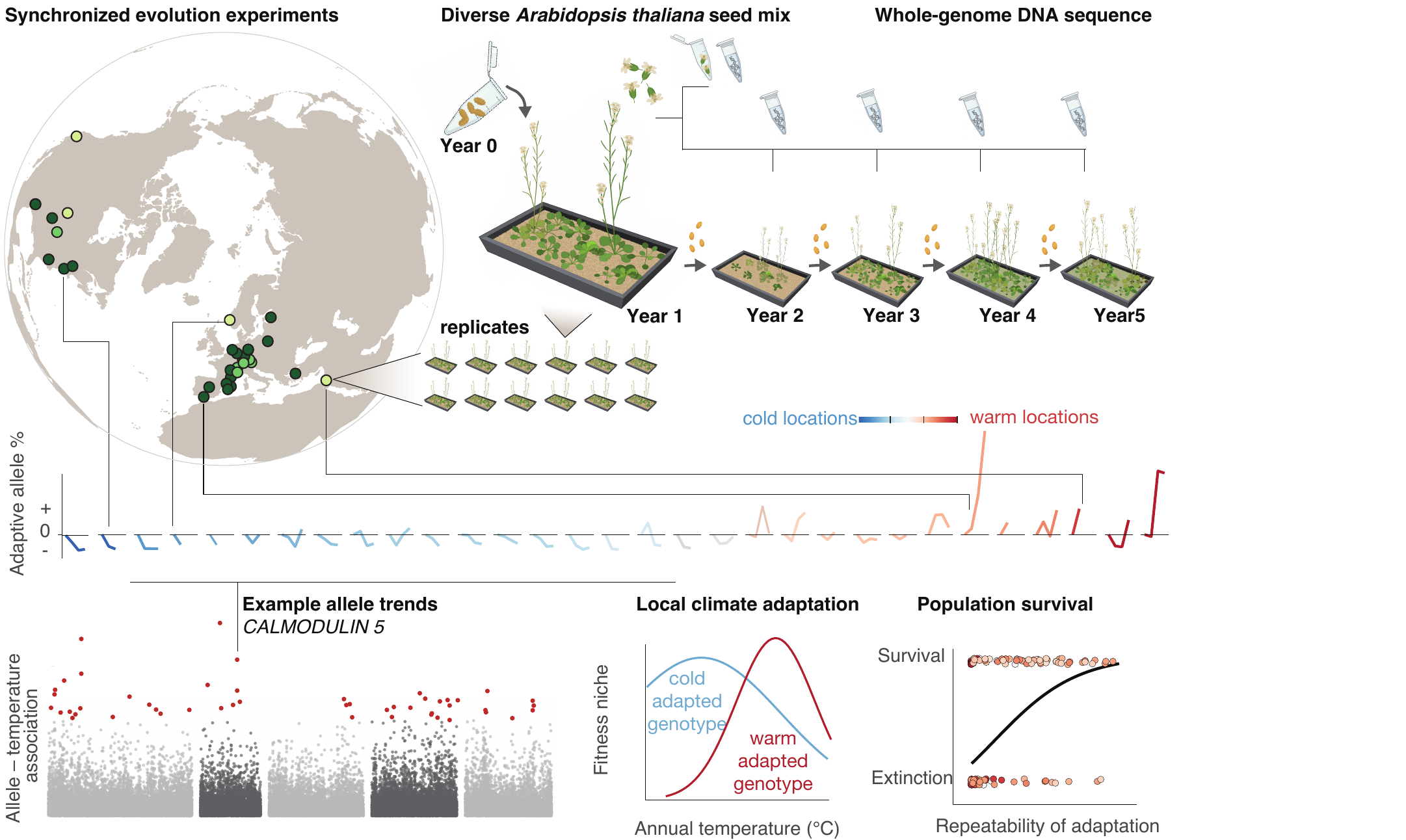
GrENE-net Science summary figure

Summary figure — Wu, Bellagio, Peng et al., Rapid adaptation and extinction in synchronized outdoor evolution experiments of Arabidopsis, Science (2026).

Open the data center
03 — Documentation

Protocols, policy & ethics.

Note on post-experiment handling: although A. thaliana is native or naturalized everywhere GrENE-net operates, participants grow replicate populations in a controlled area, preferably an institution's grounds free from natural A. thaliana. After the experiment all used soil and plant material is incinerated and a herbicide treatment is applied in a secured perimeter to eliminate any trace of planted seeds.

The Network

A distributed collaboration, one shared experiment.

GrENE-net is set up as a coordinated distributed experiment. Field sites are run by partner labs across continents, all following an identical protocol and feeding a shared sequencing and analysis pipeline.

45
field sites worldwide
30
climate zones spanned
2017–22
Phase I experiment run
Co-coordinators
Moisés Expósito-Alonso
Co-coordinator · Genomics lead
Niek Scheepens
Niek Scheepens
Co-coordinator
François Vasseur
François Vasseur
Co-coordinator
Genome sequencing & data analysis team
Xing Wu
Xing Wu
Sequencing & analysis
Tatiana Bellagio
Tatiana Bellagio
Sequencing & analysis
Yunru Peng
Yunru Peng
Sequencing & analysis
Meixi Lin
Meixi Lin
Methods development
Lucas Czech
Lucas Czech
Computational biology
Participating sites & leads
Publications

Papers & citations.

Work in progress

Manuscripts in preparation

In prep

New mutations and recombination in evolution experiments of Arabidopsis thaliana

Epstein et al. · GrENE-net Consortium · Phase II
forthcoming
In prep

Half a decade evolution in outdoor experiments of Arabidopsis thaliana

GrENE-net Consortium · Phase II
forthcoming

From the consortium

Published papers from the GrENE-net collaboration

2026

Rapid adaptation and extinction in synchronized outdoor evolution experiments of Arabidopsis

Xing Wu, Tatiana Bellagio, Yunru Peng, Lucas Czech, Meixi Lin, Patricia Lang, Ruth Epstein, Mohamed Abdelaziz, Jake Alexander, Mireille Caton-Darby, Carlos Alonso-Blanco, Heidi Lie Andersen, Modesto Berbel, Joy Bergelson, Liana Burghardt, Carolin Delker, Panayiotis G. Dimitrakopoulos, Kathleen Donohue, Walter Durka, Gema Escribano-Avila, Steven J. Franks, Felix B. Fritschi, Alexandros Galanidis, Alfredo García-Fernández, Ana García-Muñoz, Elena Hamann, Martijn Herber, Allison Hutt, José M. Iriondo, Thomas E. Juenger, Stephen Keller, Karin Koehl, Arthur Korte, Pamela Korte, Alexander Kutschera, Carlos Lara-Romero, Laura Leventhal, Daniel Maag, Arnald Marcer, Martí March-Salas, Juliette de Meaux, Belén Méndez-Vigo, Javier Morente-López, Timothy C. Morton, Zuzana Münzbergová, Anne Muola, Meelis Pärtel, F. Xavier Picó, Brandie Quarles-Chidyagwai, Marcel Quint, Niklas Reichelt, Agnieszka Rudak, Johanna Schmitt, Merav Seifan, Basten L. Snoek, Remco Stam, John R. Stinchcombe, Marc Stift, Mark A. Taylor, Peter Tiffin, Irène Till-Bottraud, Anna Traveset, Jean-Gabriel Valay, Martijn van Zanten, Vigdis Vandvik, Cyrille Violle, Maciej Wódkiewicz, Detlef Weigel, Oliver Bossdorf, Robert Colautti, François Vasseur, J.F. Scheepens, Moisés Expósito-Alonso
Science
2023

grenedalf: population genetic statistics for the next generation of pool sequencing

Lucas Czech, Jeffrey P. Spence, Moisés Expósito-Alonso
Bioinformatics
2022

Monitoring rapid evolution of plant populations at scale with Pool-Sequencing

Lucas Czech, Yunru Peng, Jeffrey P. Spence, Patricia L. M. Lang, Tatiana Bellagio, Julia Hildebrandt, Katrin Fritschi, Rebecca Schwab, Beth A. Rowan, GrENE-net consortium, Detlef Weigel, J.F. Scheepens, François Vasseur, Moisés Expósito-Alonso
bioRxiv
2022

grenepipe: A flexible, scalable, and reproducible pipeline to automate variant and frequency calling from sequence reads

Lucas Czech, Moisés Expósito-Alonso
Bioinformatics

Articles using published GrENE-net data

Independent studies reusing the open dataset

As researchers reuse the open allele-frequency tables, site metadata, and greneR package, their papers will be listed here. Using the data? Let us know.

See the full publications list →

Data Center

Open data, open methods.

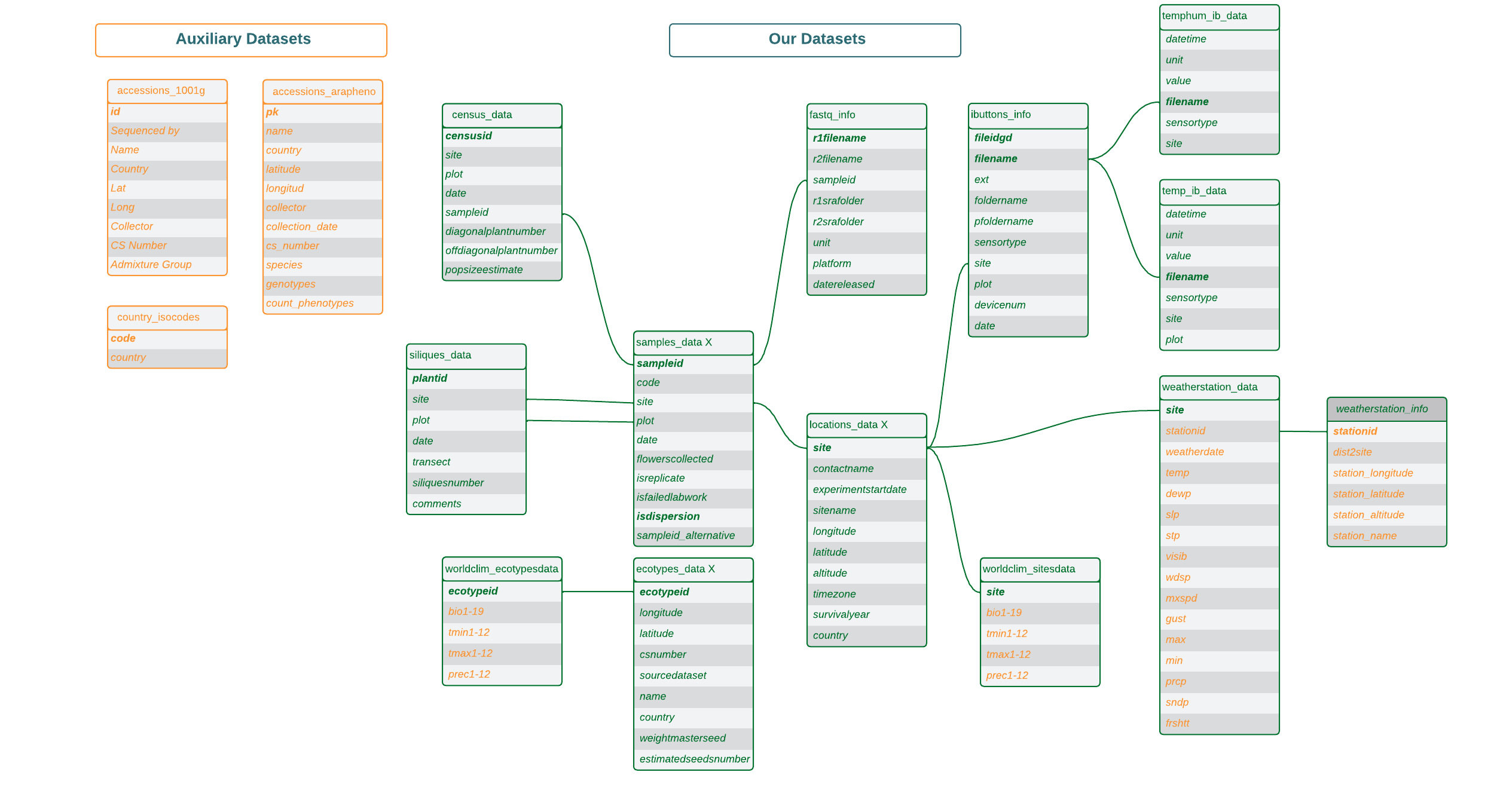
The GrENE-net project provides comprehensive metadata and genomic data through the greneR package — the 2017–2022 Phase I dataset, built for reuse by the wider research community.

GrENE-net data structure (entity relationship diagram)

Data structure — interconnected tables for population monitoring, genomic processing, genetic diversity and site metadata.

Datasets
TSVOpen access

Census data

Population sizes and growth dynamics across all experimental plots.

TSVOpen access

Samples data

Flower sampling records and metadata collected throughout the experiment.

TSVOpen access

Ecotypes data

Information about the 230 natural accessions used as founders, plus their source-climate data.

TSV / RDAOpen access

Site & climate metadata

Geocoordinates, weather and soil measurements for every field site.

FASTQSRA · PRJNA1256468

Raw pool-seq reads

Whole-genome sequencing reads from 2,500+ pooled population samples.

R packageGitHub

greneR package

Load, analyze and visualize GrENE-net metadata and allele-frequency data. All analysis code, open and reproducible.

Archived on Zenodo
DOI · Zenodo

greneR package & metadata

Metadata tables for the GrENE-net experiment (Bellagio & Exposito-Alonso).

DOI · Zenodo

Allele frequencies & supplemental data

Allele-frequency tables, supplemental datasets and analysis code (Wu et al.).

Software

Open tools for evolve-and-resequence.

The following software tools were developed and used in GrENE-net — but you can also use them in your own research. All are open-source; contributions and feedback are welcome.

PIPELINE

grenepipe

A flexible, scalable, reproducible pipeline automating variant calling from raw sequence reads — read trimming, mapping, variant calling and QC, for both individual and pool sequencing.

GitHub →Docs →
TOOLKIT

grenedalf

A toolkit for population-genetic statistics from pool-sequenced samples, designed for evolve-and-resequence experiments — efficient implementations of common analyses.

GitHub →Docs →
METHOD

HapFIRE

Haplotype-based inference of recombination events, designed to work with pool-sequencing data — illuminating recombination patterns and their impact on genetic diversity.

GitHub →Docs →
R package
R PACKAGE

greneR

An R package bundling all the metadata and analysis used in the project, in the spirit of open and reproducible research. Load, analyze and visualize GrENE-net data directly.

GitHub →